
AI bills creep up quietly. A team that defaults to the most powerful model for every request — summarization, classification, rewriting, code review — can spend three to five times more than necessary. The fix is not using AI less. It is using the right model for each task.
The hidden cost of defaulting to frontier models
Frontier models like GPT-4 class systems are priced for complex reasoning, not routine operations. When you route every prompt through them, you are paying premium rates for tasks a mid-tier model completes in one pass. Summarizing a support ticket, reformatting JSON, or classifying intent rarely needs maximum reasoning depth.
Cost overruns also come from retries. A cheaper model that fails twice and succeeds on the third attempt can cost more than a capable model that succeeds immediately. Measure cost per successful output, not cost per token alone.
Tier your models by task complexity
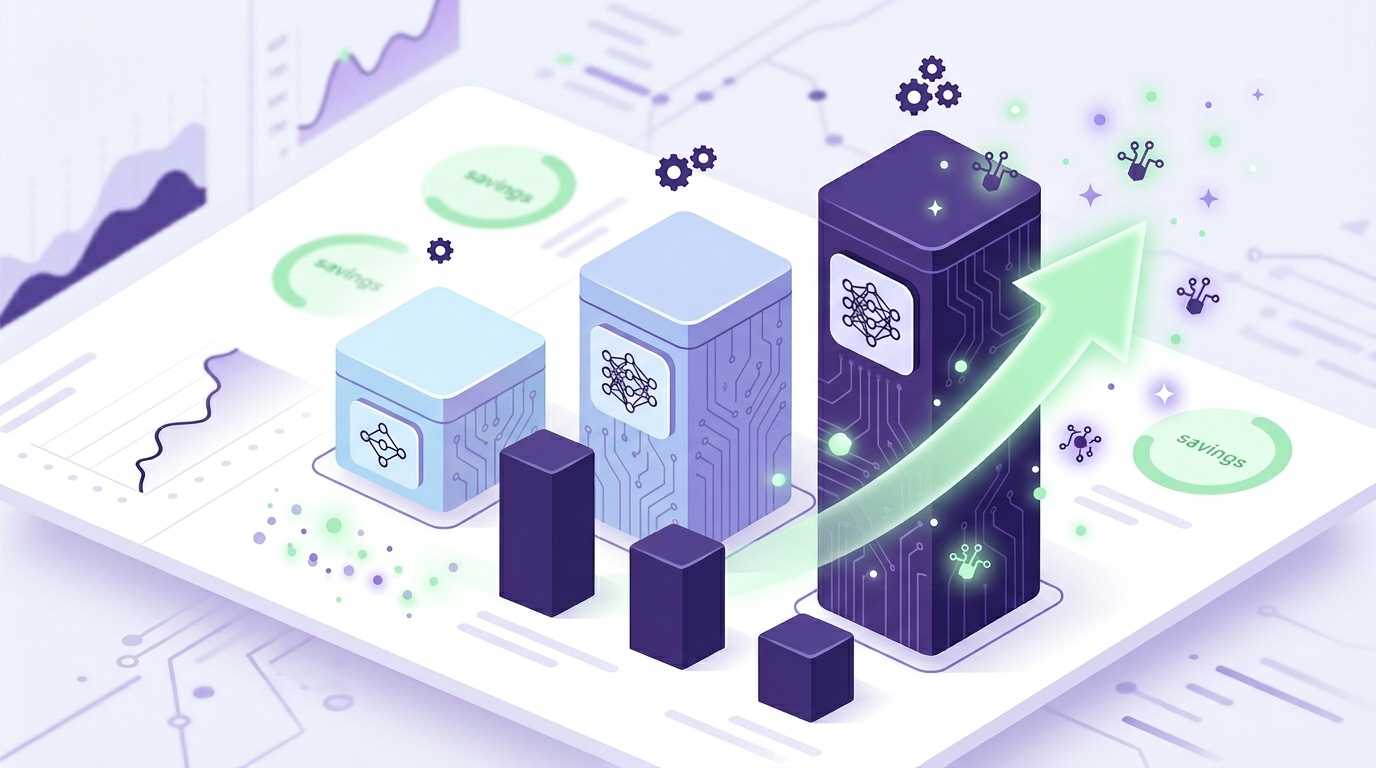
Create three tiers in your workflow:
- Lightweight tier: Classification, extraction, formatting, short summaries
- Mid-tier: Most production writing, analysis, and standard code assistance
- Frontier tier: Complex reasoning, architecture decisions, high-stakes creative work
Document which tier owns which task type. Share this internally so engineers, marketers, and support agents do not all default to the most expensive option out of habit.
Benchmark before you commit
Run your top 10–20 production prompts across multiple models. Compare output quality, latency, and total cost side-by-side. Teams that do this typically find 20–40% savings within the first week — without changing their overall workflow structure.
ChatComparison was built for exactly this: see pricing, speed, and quality in one place so you can stop overpaying for the wrong model.
Reduce waste in your prompts
Long system prompts repeated on every request add up fast. Cache static instructions where your stack allows it. Trim unnecessary context. Use structured outputs to reduce back-and-forth correction loops. Every eliminated round-trip is money saved.
Set budgets and review monthly
Assign per-team or per-project token budgets. Review usage monthly by task type, not just by total spend. Spikes often reveal a single workflow that quietly migrated to an expensive default.
Realistic savings expectations
Most teams can cut 25–35% of LLM spend through model right-sizing alone — before negotiating enterprise contracts or switching providers. The teams that sustain savings treat model selection as infrastructure, not an afterthought.
Smarter model selection is the highest-ROI optimization in most AI stacks today. Start with your five most frequent prompts, compare models in parallel, and reroute the easy wins to cheaper tiers tomorrow.